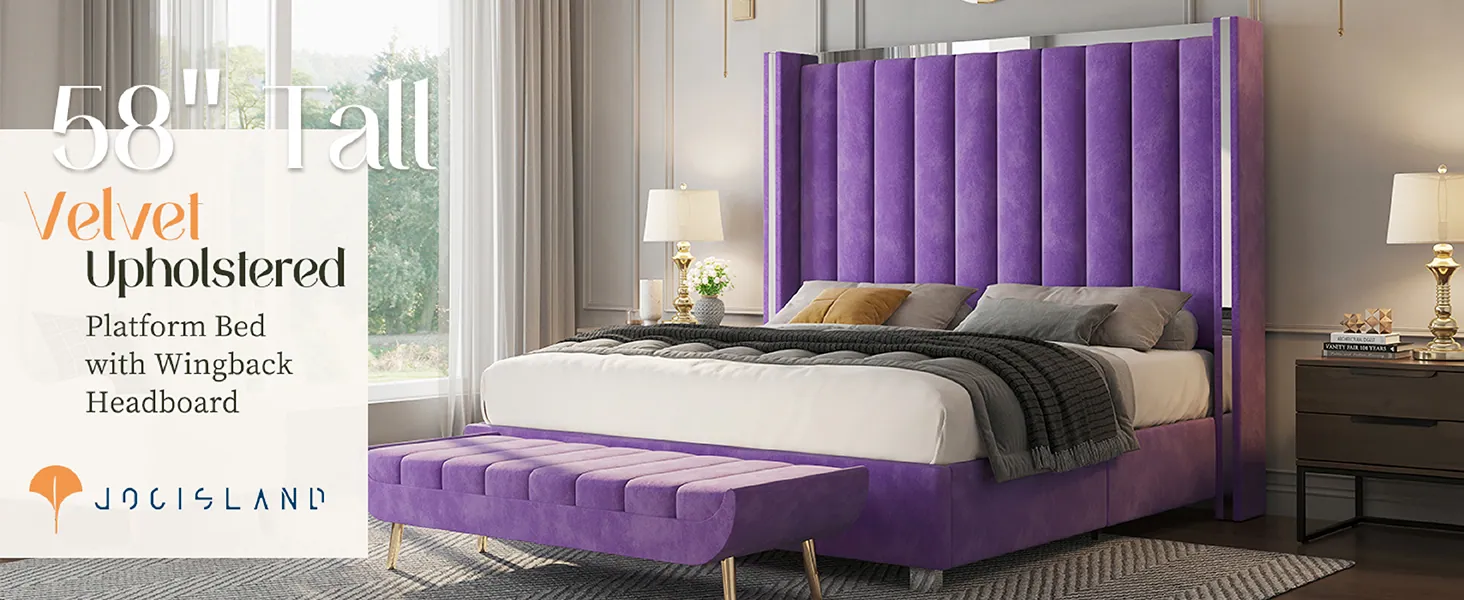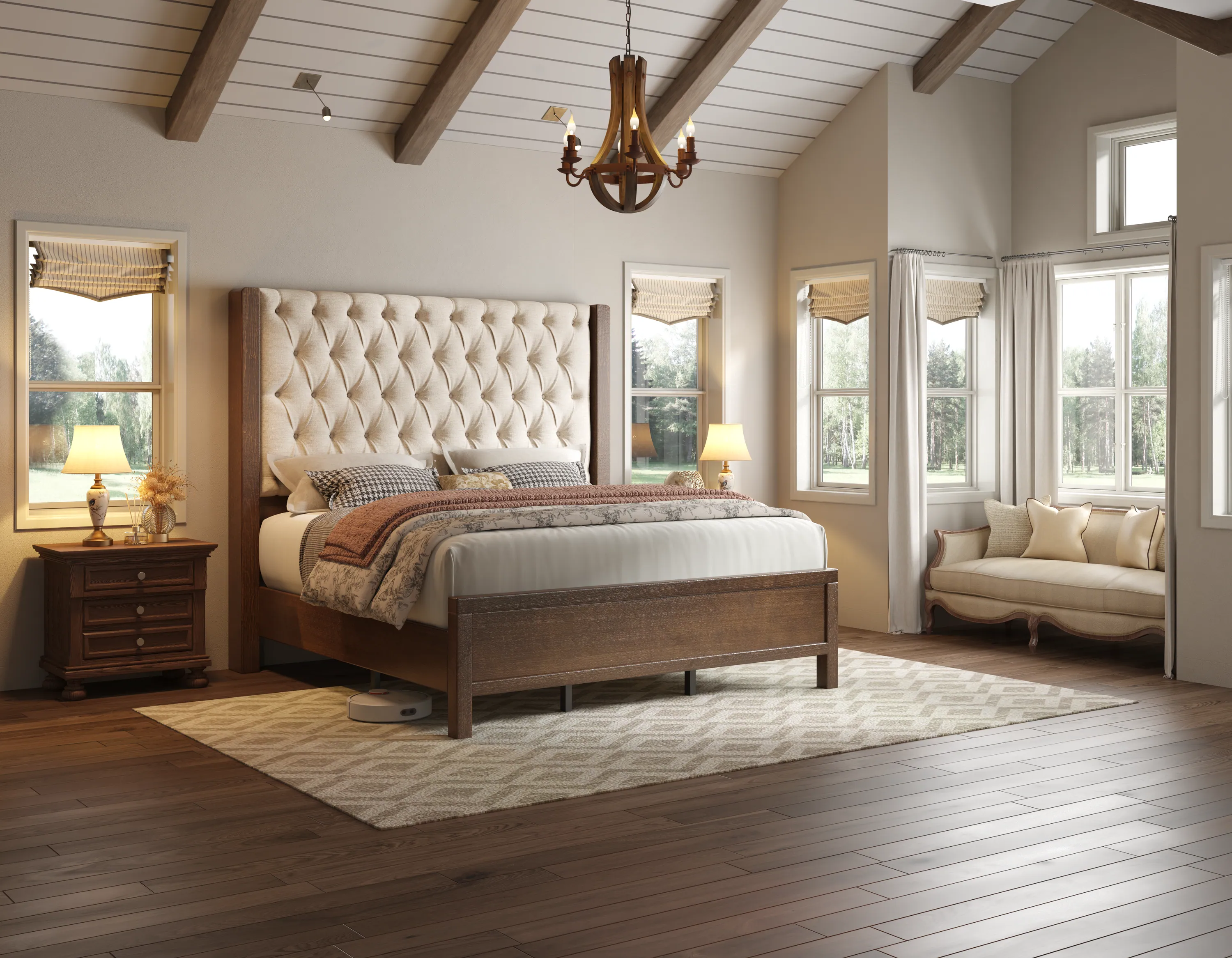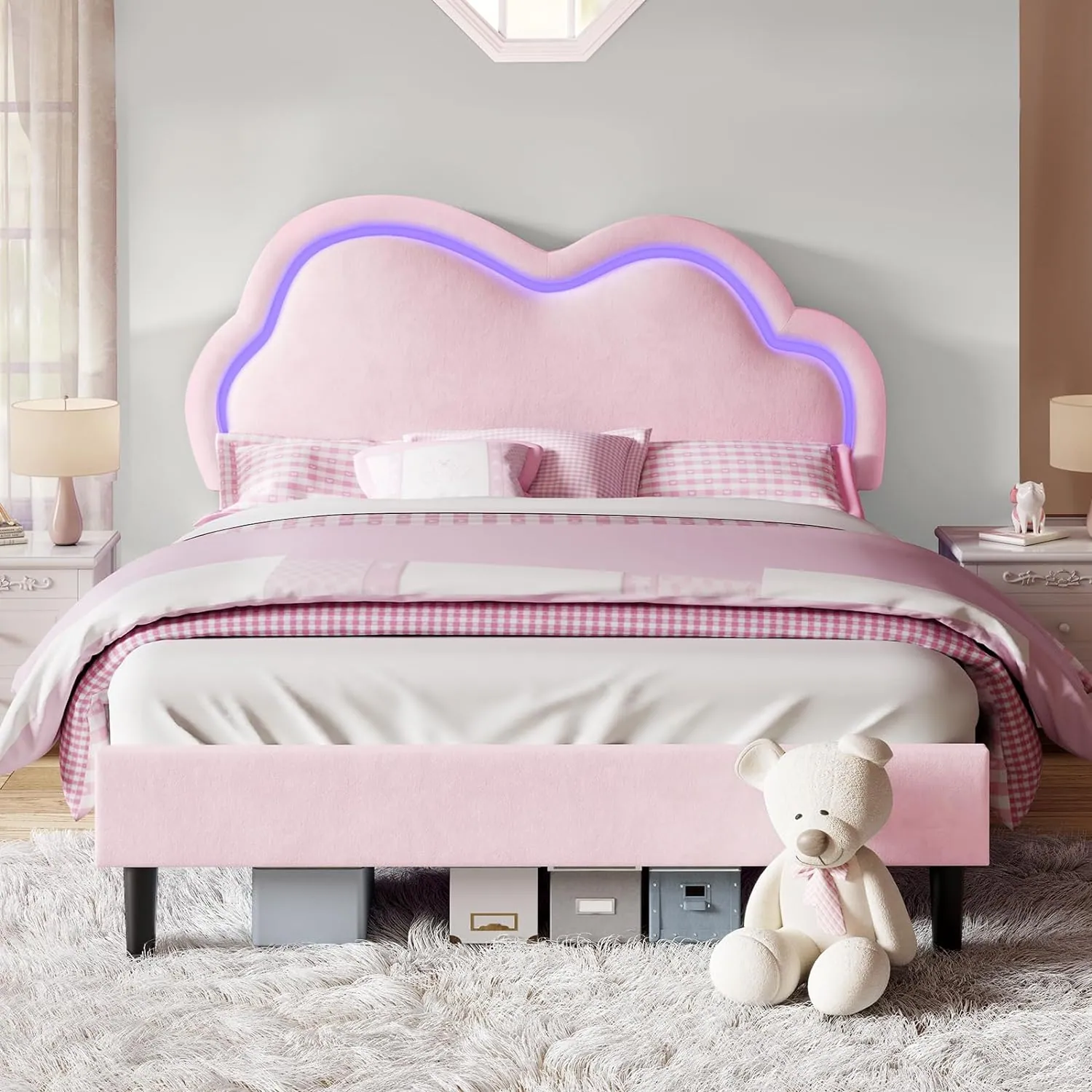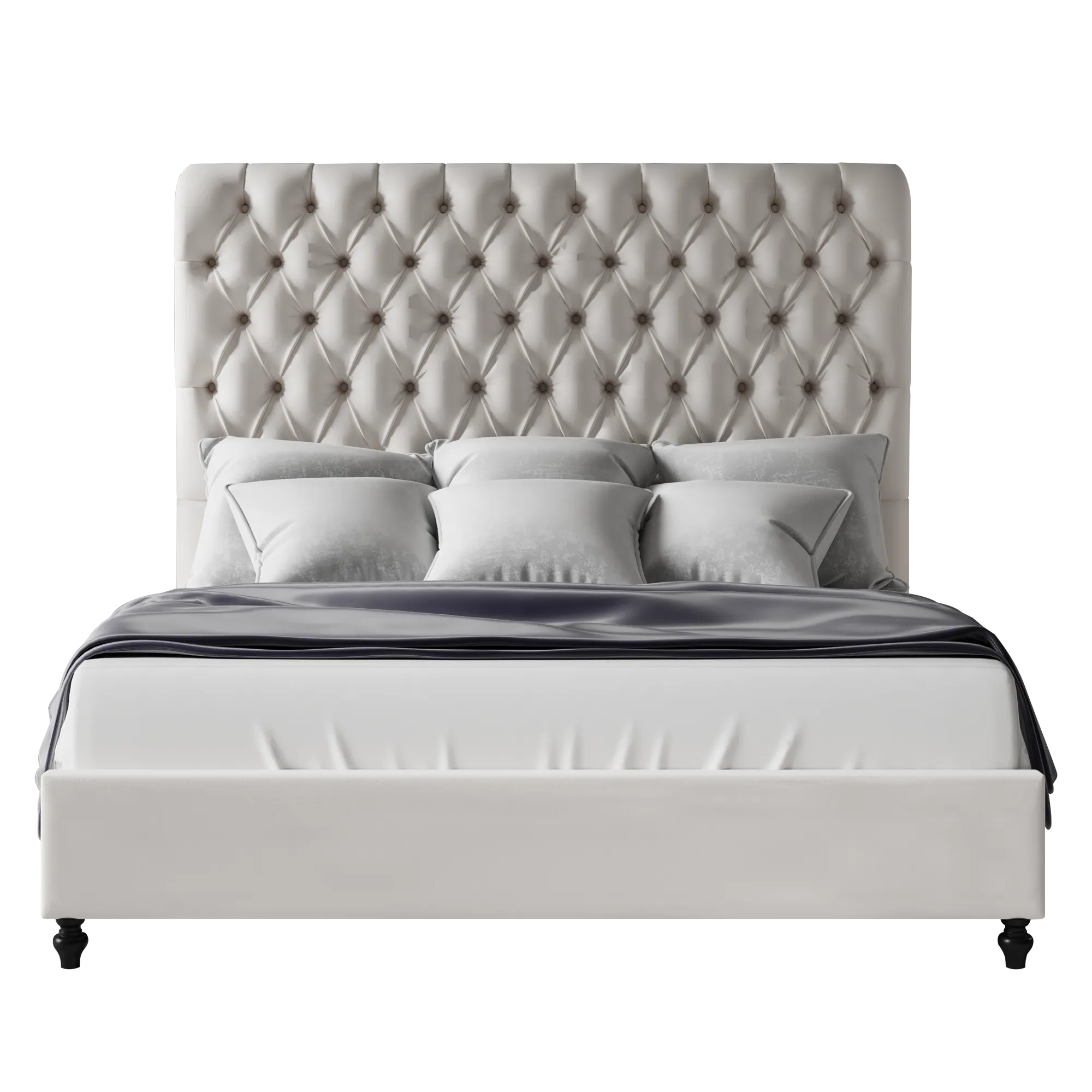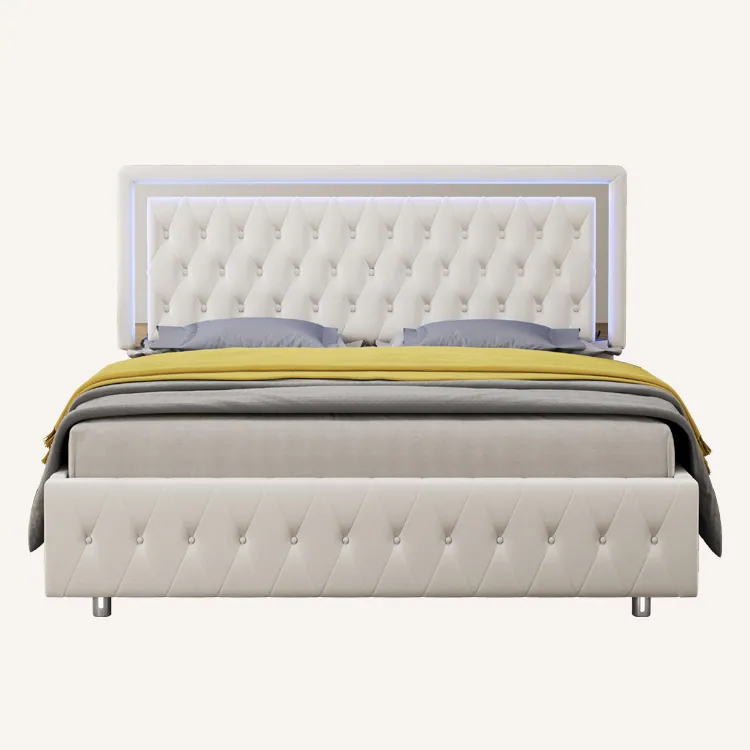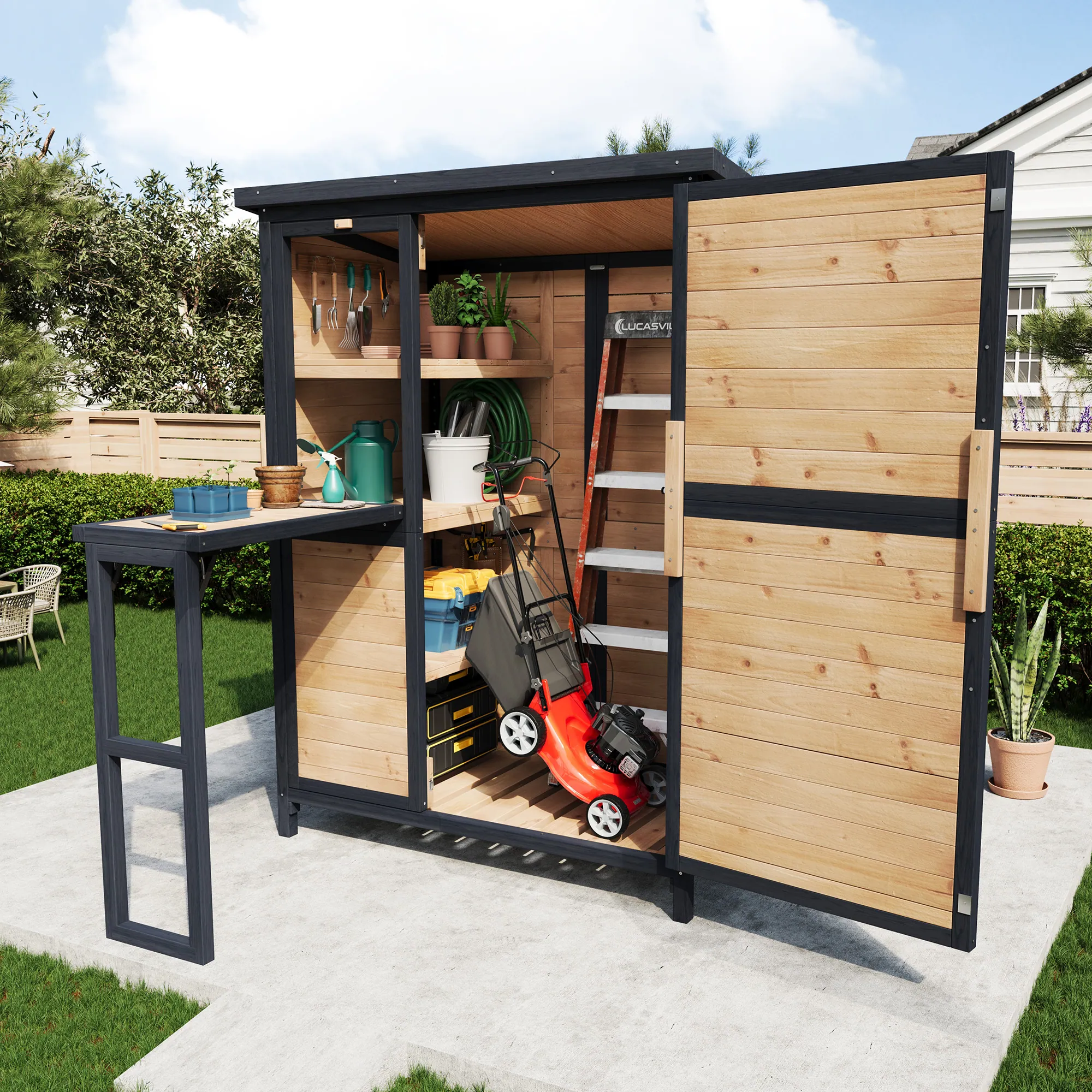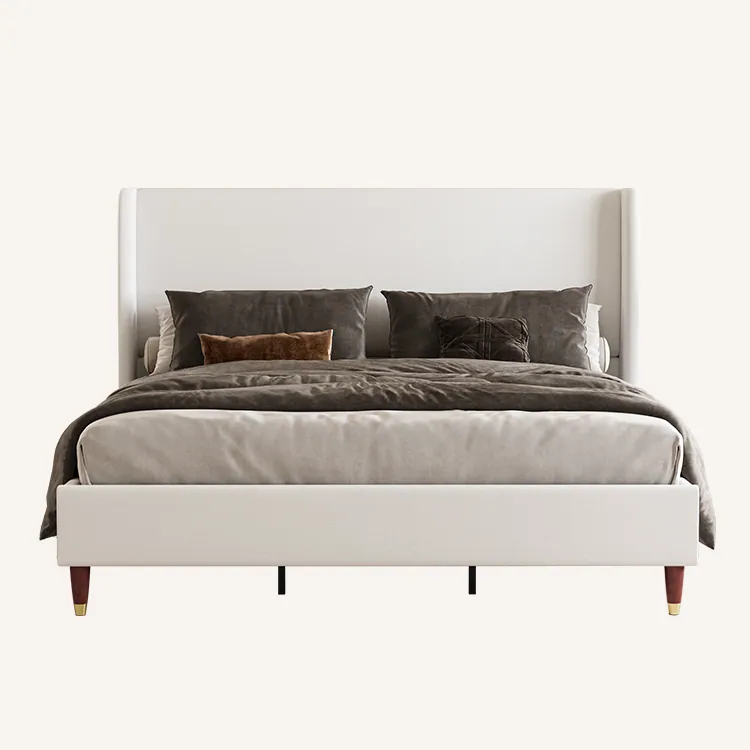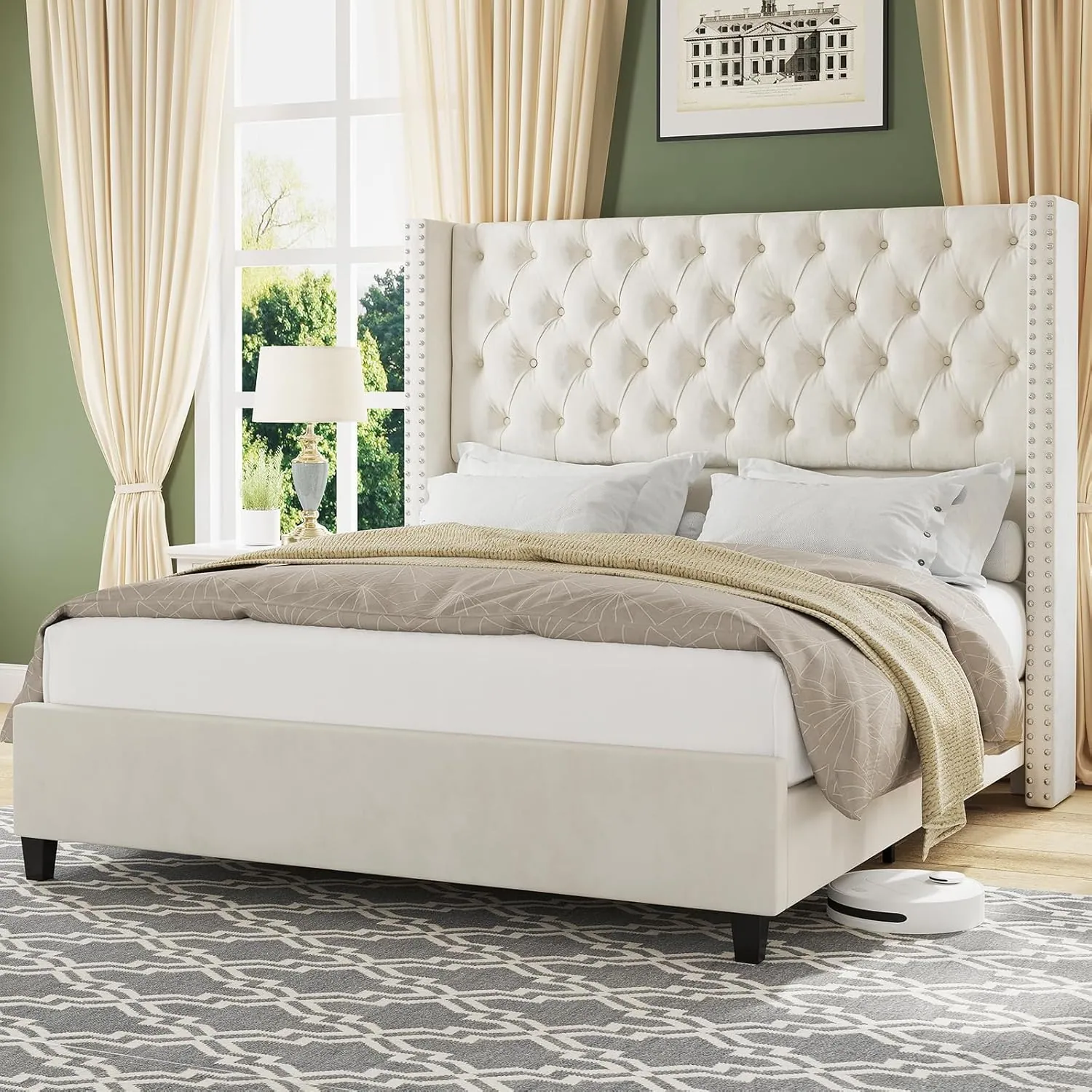
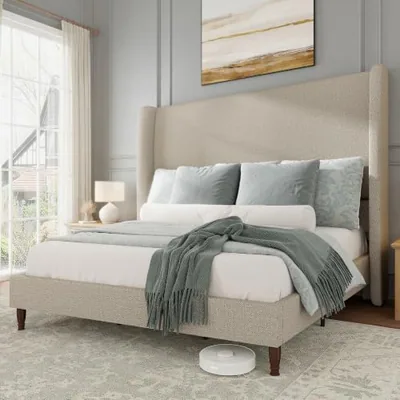
King Bed Frame Linen Upholstered Wingback Headboard, Brown
King·81.1″ × 51.6″·Linen
$259.99

Where dreams begin
We make 326 pieces across 12 departments, for every room the family lives in. 185 bed frames anchor the bedroom, with headboards from 49.2″ to 65″ and fabrics like velvet and boucle. 144 of them need no box spring. In the living room, 29 sofas and sectionals shift shape: sleeper sofas, modular clouds, power recliners. Outside, 14 cedar gazebos, pergolas, and carports build the yard you actually use.
Shop by room
Every department’s pieces live on a single page, and we show the width, height, and depth of each one right beside its photo.
Upholstered Beds93 pieces
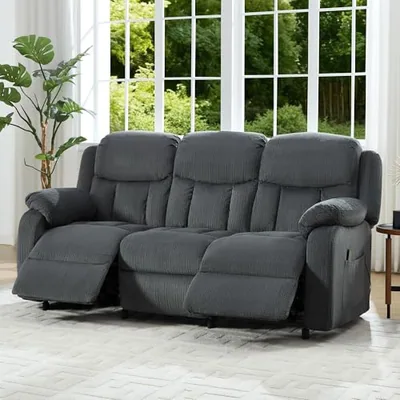 Sofas & Sectionals29 pieces
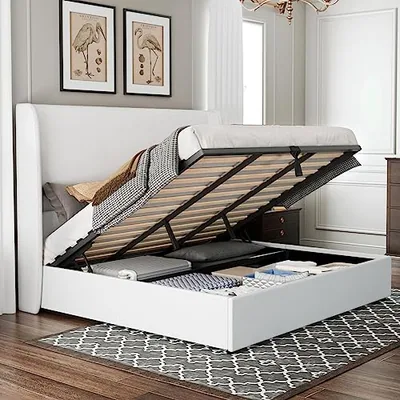 Storage Beds22 pieces
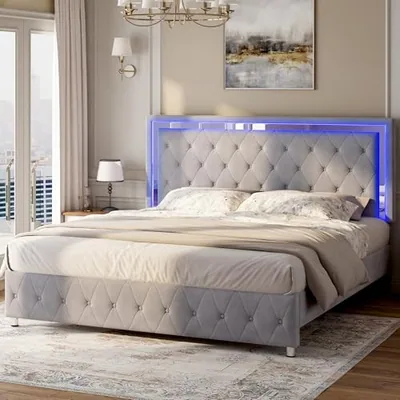 LED & Charging Beds19 pieces
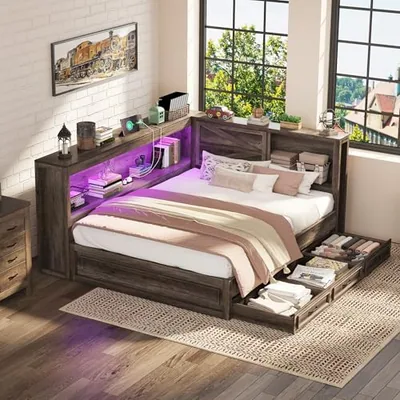 Kids & Teen Beds27 pieces
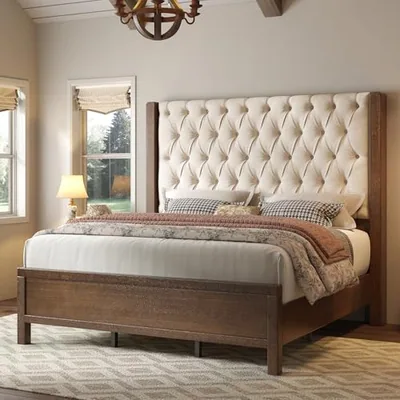 Solid Wood Beds21 pieces
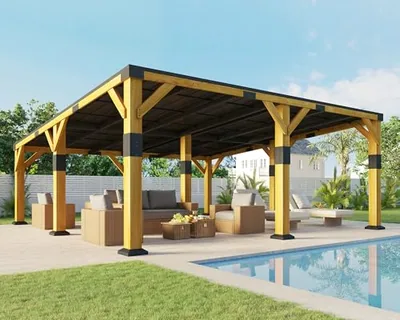 Outdoor Structures50 pieces
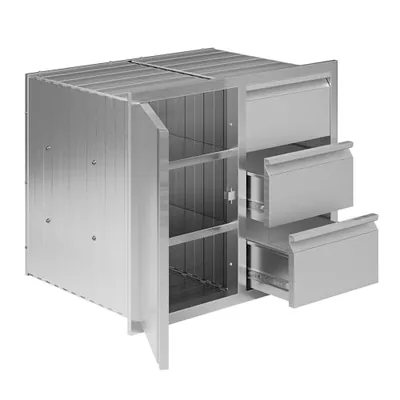 Outdoor Kitchen & Stainless31 pieces
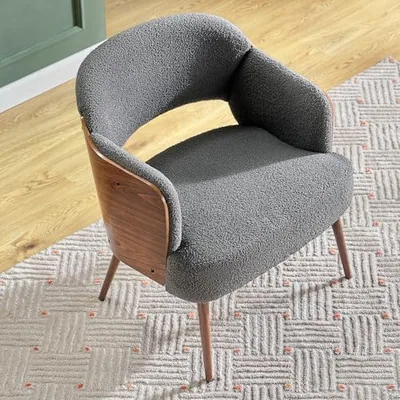 Recliners & Chairs8 pieces
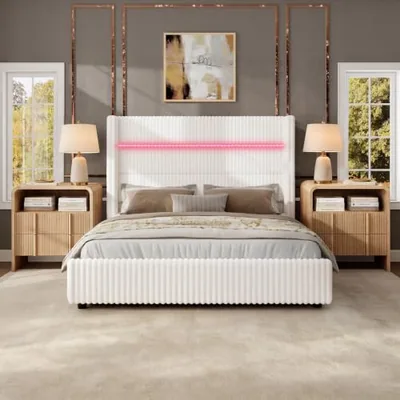 Bedroom Sets & Nightstands6 pieces
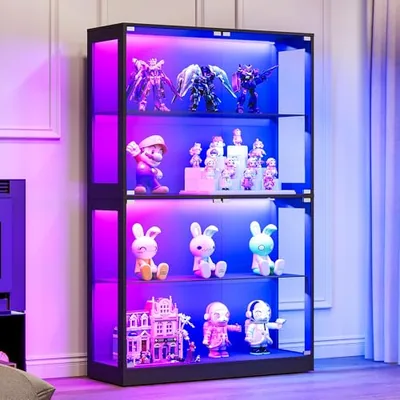 Display & Storage Cabinets11 pieces
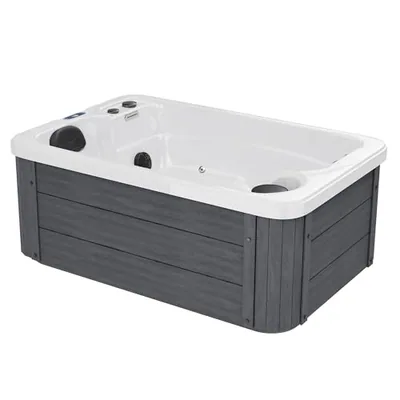 Hot Tubs & Home Extras9 pieces
Bedroom
6 of the 93 pieces in this part of the range.
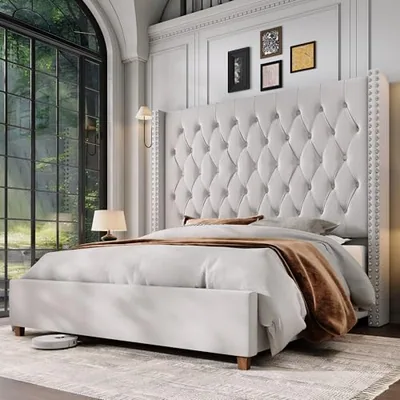
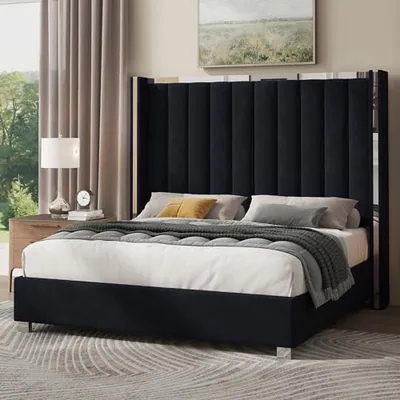
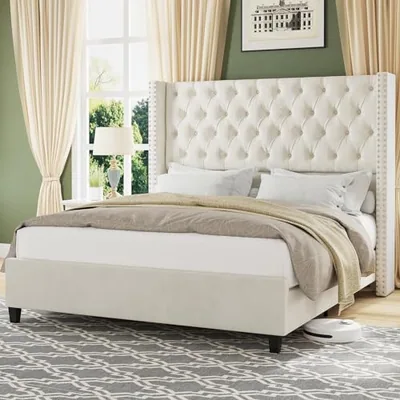
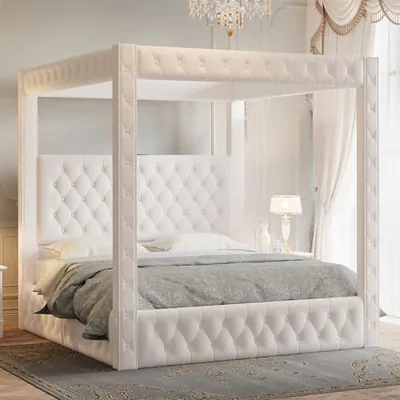 Charging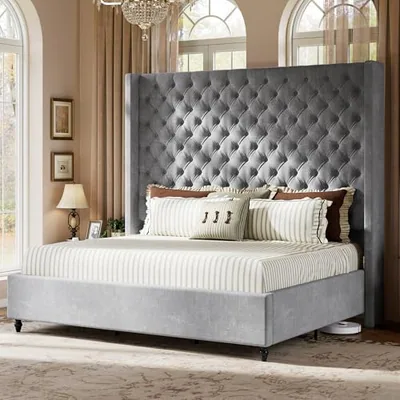
Added value: size planner
We build 185 bed frames, from 16 twin to 15 California king, and 75 of them publish a headboard height so you can size the wall before you size the mattress.
Start with the mattress you already own. A twin needs a twin frame, a full needs a full frame, and a California king needs a California king frame. The frame should match without overhang or gaps. We build the bed around that first.
Then look at the wall. A low headboard suits a room with a window or a short wall. A tall one anchors a high ceiling and gives you a place to lean. We publish headboard height on every frame where it matters, so you can measure before you commit. If the wall is low, a tall wingback will fight the room.
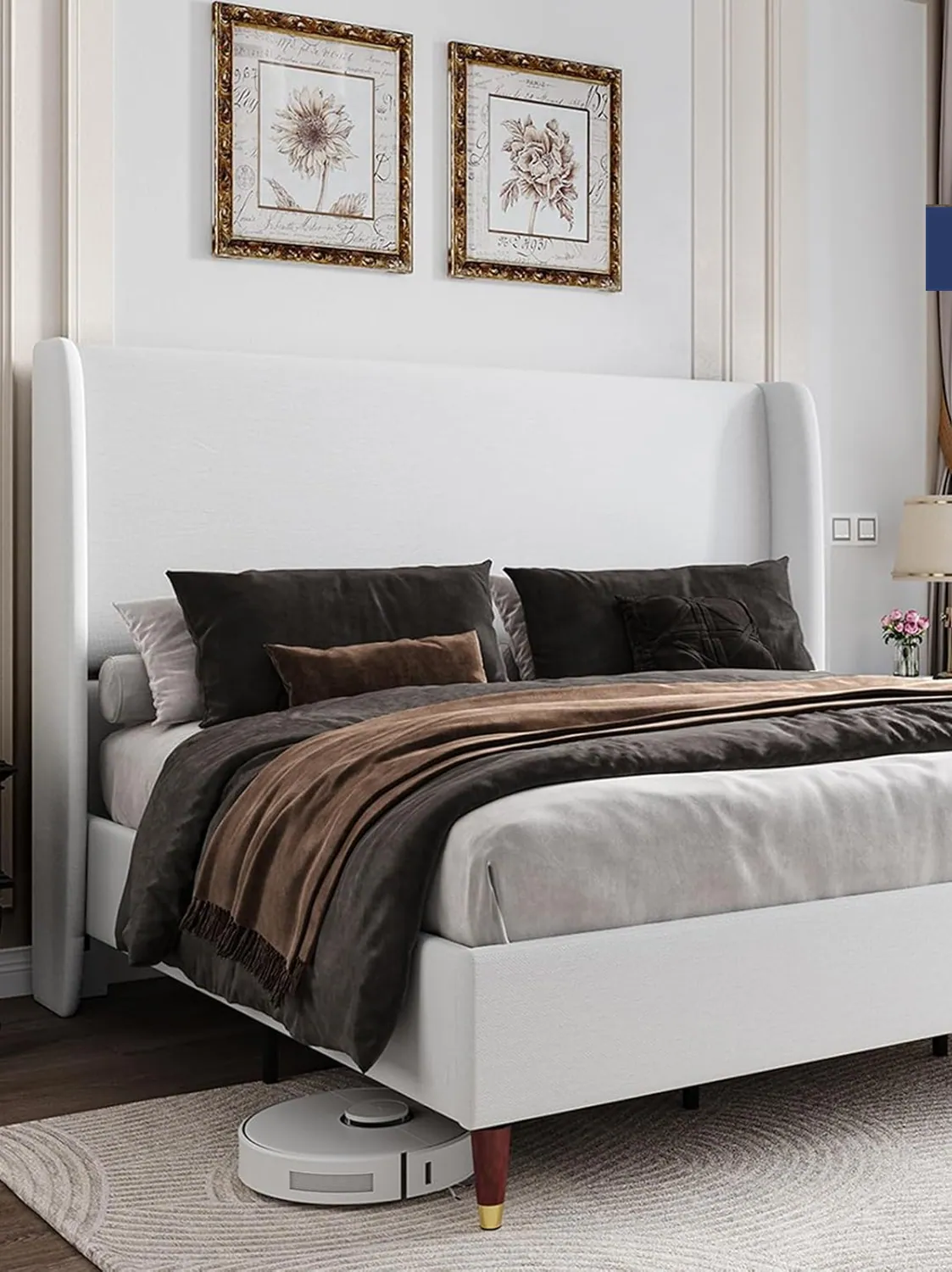
Two details change the footprint. A wingback headboard is wider than the mattress size suggests, because the wings flare out to the sides. A footboard adds length at the foot, and you will walk around it every day. If your space is tight, keep the frame simple. If the room can carry it, a wingback or a footboard can make the bed feel like a room of its own.
| Mattress size | Frames we make | Typical frame width | Typical frame length | From |
|---|---|---|---|---|
| Twin | 16 | 42.1″ | 79.1″ | $149.99 |
| Full | 28 | 58″ | 79.1″ | $179.98 |
| Queen | 64 | 64.6″ | 84.6″ | $179.99 |
| King | 61 | 80″ | 84.3″ | $199.99 |
| California King | 15 | 76.8″ | 87″ | $269.99 |
| Headboard height | What it covers | Frames | Fabrics in the band |
|---|---|---|---|
| 40″ to 52″ | Below the window sill | 36 | Velvet, Corduroy |
| 52″ to 60″ | Shoulder of a standing adult | 16 | Velvet |
| 60″ to 70″ | Eye level and above | 23 | Velvet, Faux fur |
Bedroom
6 of the 41 pieces in this part of the range.
StorageLED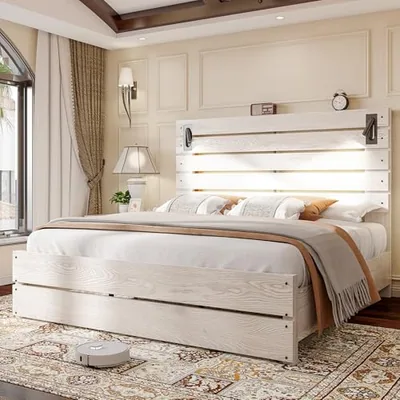 LED
LED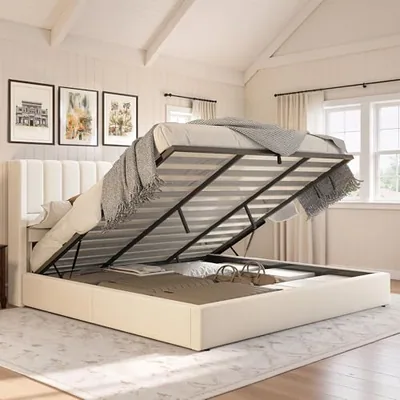 Storage
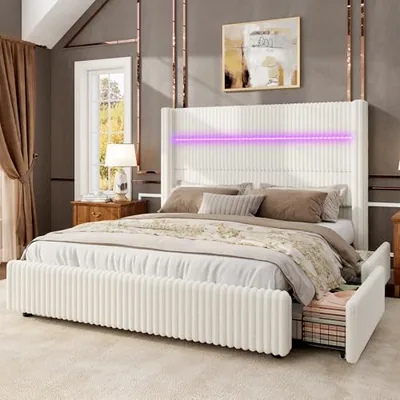 StorageLED
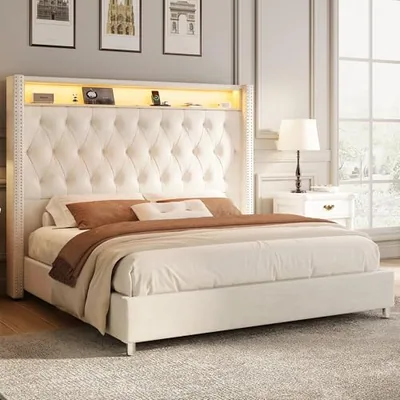 LEDCharging
Compared honestly
We set our bed frame against three other ways to get a bed: a big-box flat-pack, a custom upholstered piece, and a mattress-store bundle.
| Jocisland | Big-box flat pack | Custom upholsterer | Mattress-store bundle | |
|---|---|---|---|---|
| Headboard height | 49.2″ to 65″, published on every frame that states it | Usually under 48″, often not stated | Any height you ask for | Whatever the bundle carries |
| Fabric choice | Velvet, linen, faux fur, boucle, corduroy; 14 colors across the range | One or two fabrics per model | Any fabric, at fabric prices | Rarely a choice |
| Box spring | 144 frames state a slatted platform that needs none | Often required | Depends on the build | Usually included and paid for |
| Storage and power | 27 with storage, 43 with charging built in | Seldom | On request, at a price | Seldom |
| Measurements before you buy | 321 of 326 pieces publish width, height and depth | Usually | Made to your numbers | Sometimes |
| Lead time | Ships flat from our retail partner, assembly is yours | Ships flat | Weeks to months | Delivered assembled |
| Who it will not suit | Someone who wants a bed made to one wall, or who will not assemble furniture | Someone who wants a tall headboard | Someone on a flat-pack budget | Someone who already owns a mattress |
Added value: fabric guide
We sit on every fabric sample before it makes the cut, because velvet, linen, and boucle each catch the light and the hand in their own way.
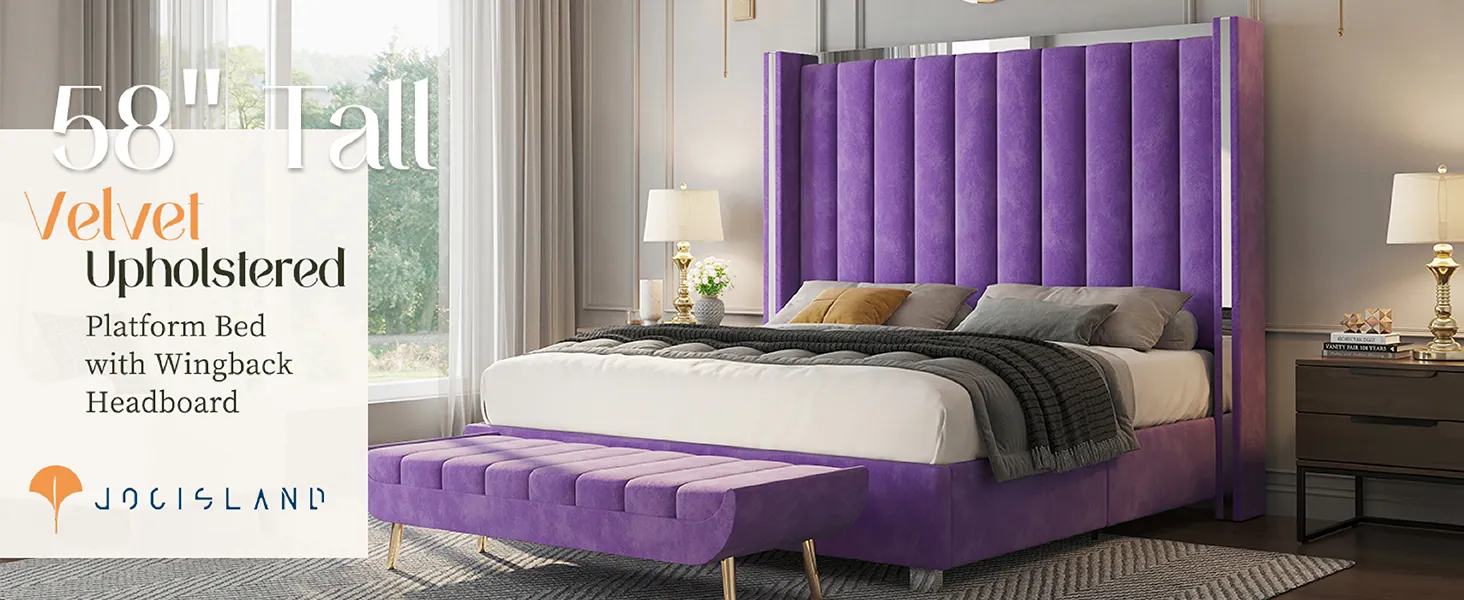
We choose velvet for tall headboards and anything meant to read soft before you touch it. It has a short dense pile that catches light and moves with a hand, so a palm print shows until you brush it the other way. Velvet is the one we would not put in a house with cats or in front of a sunny window. A claw mark sits on the pile and direct sun can shift the color over time.
Linen starts crisp and relaxes with use. Creases stay visible and we think that is part of its character. Faux fur is deep and forgiving, and it hides everyday touches better than a flat weave. Boucle has a looped, springy feel and holds its texture under light without going shiny. Corduroy is the quietest of the group, with ribs that give it a clear direction and a slight drag under the hand.
| Fabric | Frames and sofas | How it feels and wears | Care |
|---|---|---|---|
| Velvet | 55 | Deep pile that shows a hand mark and hides a seam, brushes one way. | Vacuum with the nap, blot spills, keep it out of direct sun. |
| Linen | 19 | Matte weave with visible slub, cool to the touch, creases at the corners. | Vacuum, spot clean with water only, it will show a water ring if soaked. |
| Faux fur | 13 | Long pile, warmest to sit against, sheds a little in the first weeks. | Shake and brush, never heat-dry a cover. |
| Boucle | 3 | Looped yarn with a bumpy surface, hides wear, catches rings and claws. | Vacuum with a soft brush, no rubbing. |
| Corduroy | 16 | Ribbed cotton look, the ribs flatten where you sit most. | Brush along the rib, rotate cushions where you can. |
| Faux leather | 4 | Smooth coated surface, wipes clean, warms under a body. | Damp cloth, no solvents, keep sharp objects away. |
Living room
6 of the 37 pieces in this part of the range.
Power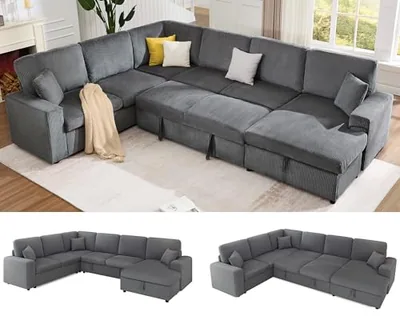
 Power
Power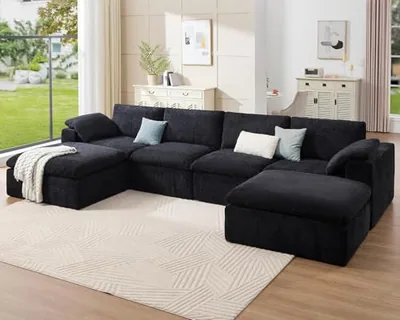
Production and history
We draw the headboard first, then the room, and that habit has grown into a range of 326 pieces across 12 departments.
We started with a wall that looked empty above a mattress, and drew a panel tall enough to reach it. That first headboard made the whole room feel steadier. We kept drawing taller ones because a wall that stops halfway up reads unfinished to us, and a bed that does not answer the wall is just a platform. The wingback shape came next, and that shape still anchors more than half the upholstered frames we make.
What began as a single panel now runs from 49.2″ to 65″ depending on the frame. The highest headboards dominate a room the way a fireplace does. They are the wrong choice for a low ceiling or a window that cuts the wall short, and we say so. A bed should settle the space, not shout at it. Every frame in the range starts from that same question: what does this wall need to feel whole.
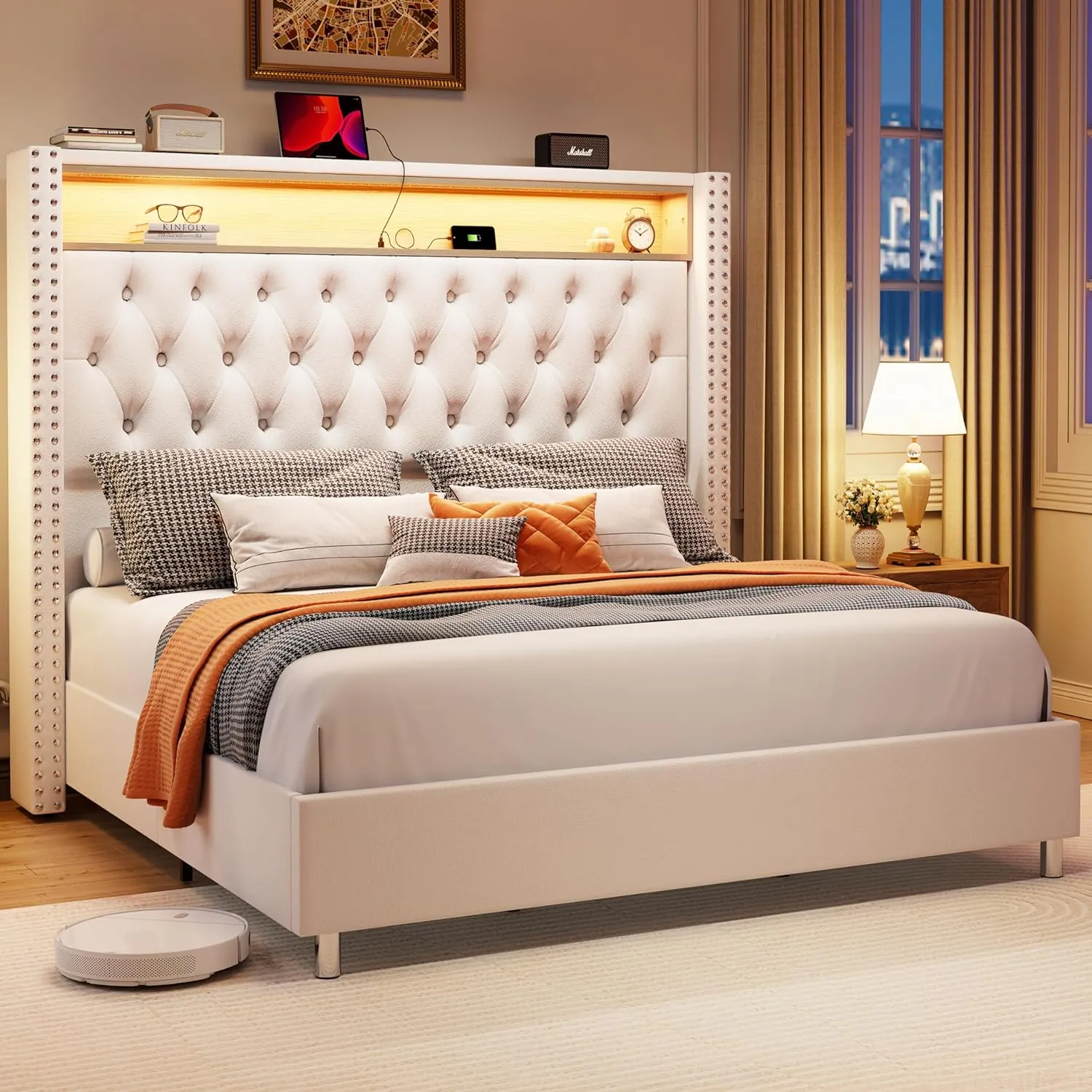
We draw the headboard first, not the frame. The height on the page comes from a proportion to the wall, not a catalog number. Then we make the first sample and sit against it. The angle you lean at changes on the third cup of coffee, so we shift the tilt. If a rail meets a knee when you sit on the edge, we lower it.
The tufting pattern stays, but the foam behind it gets softer or firmer after we feel it under a shoulder blade. A headboard that reads well at 65″ can feel too upright, and one at 49.2″ can leave you without a place to rest your head. We change the drawing after every first sit. The frame ships when the sample feels right, not when the drawing looks finished.
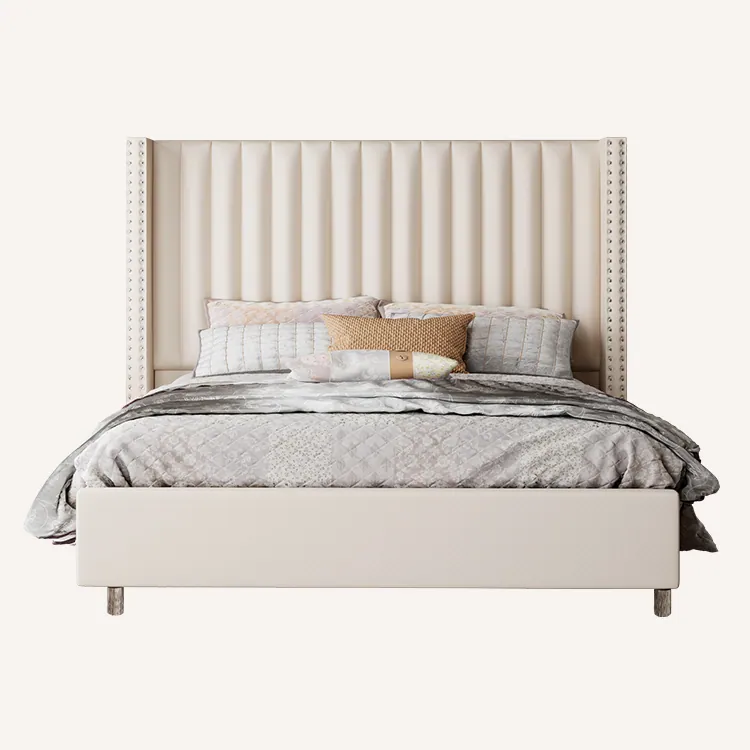
We sit on every fabric sample for an hour under a lamp. A velvet can look rich in a flat photograph but show every fingerprint after ten minutes of reading. Linen that photographs crisp turns into a crumpled map the second you settle against it. Boucle hides a lot on camera, so we test it against denim and for heat build-up. Corduroy and faux fur get the same hour. The light reveals what a lens forgives.
Not every sample makes it. What stays in our range is the fabric you can nap on, lean into, and live with. Right now we keep 55 velvet beds, 19 linen, 3 boucle, 16 corduroy, and 13 faux fur. Numbers shift, but the test never changes.
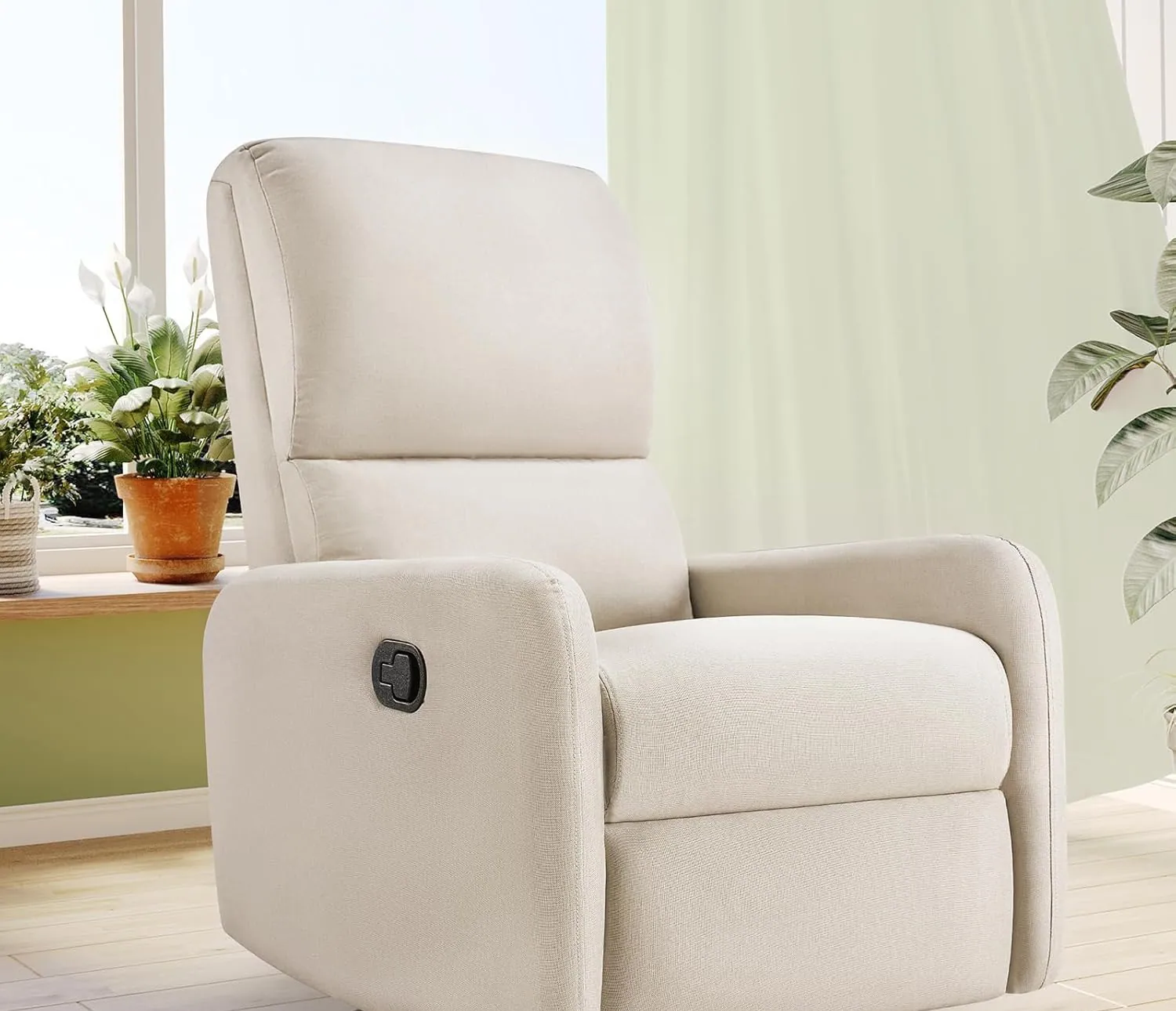
We started with beds because a headboard defines a room. Then someone asked us to draw a sofa that sleeps like a bed and a recliner that rocks a newborn. The drawings looked familiar: a tall back, a quiet frame, a place where fabric meets a hand. But the rules changed.
A sleeper sofa has to hold a mattress and a person who is not yet asleep. A nursery rocker has to move without waking the baby, and it has to keep moving for months. We sat in every sample, same as with a bed. The cloud sectional went through the same sketches as a wingback headboard: proportions to the wall, not to the cushion. We don't make living room pieces that are just living room pieces. We make them for nights when the sofa is the bed.
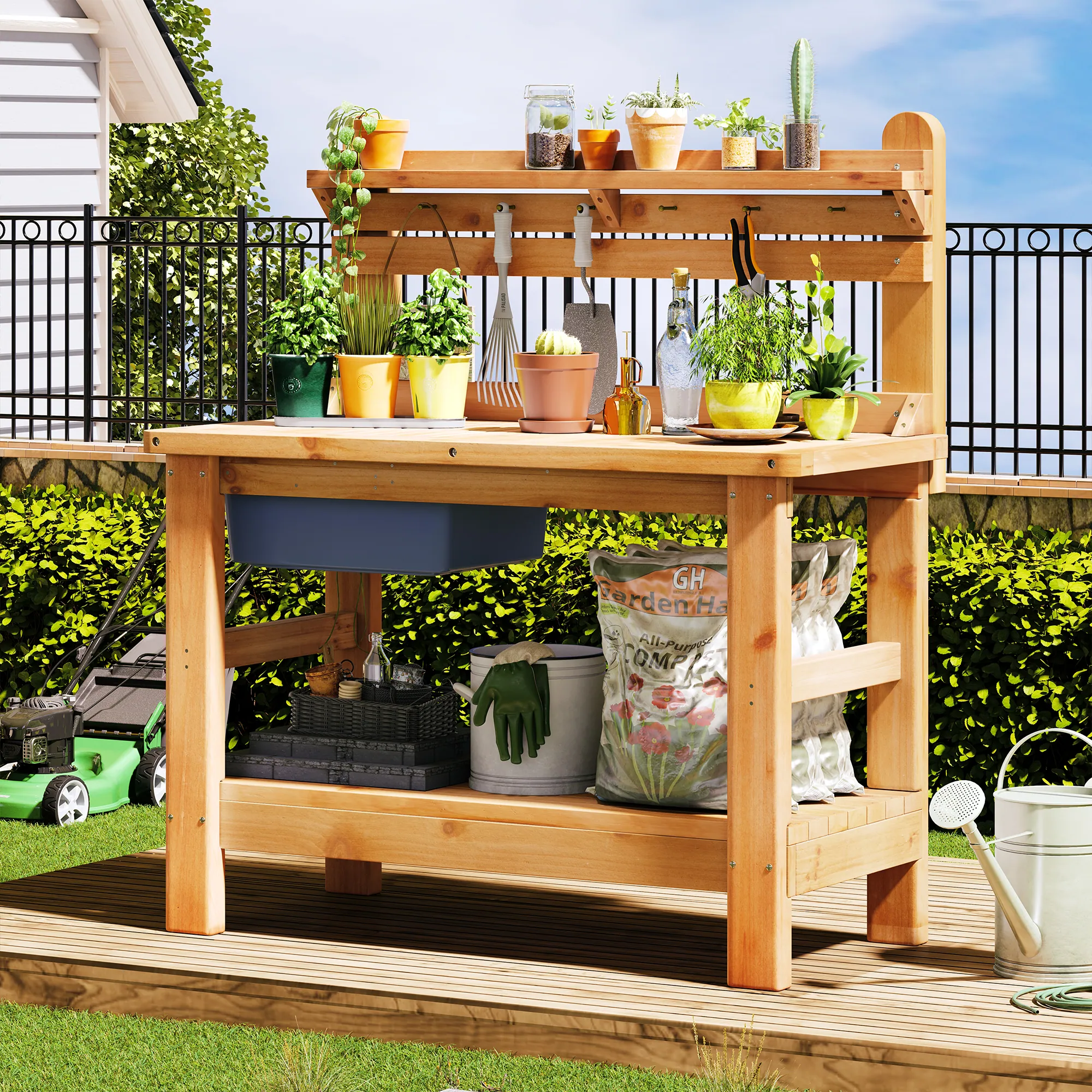
We built the yard department last. For years we drew beds, sofas, recliner frames. Then we stepped outside. The first thing we learned was that a gazebo is a sail. The carton has to cross a lawn, not a polished floor. So we designed for the wind first and the photograph second.
Our 14 cedar structures move with the weather. Wood breathes across a season. We plan for that. Our biggest piece spans 800 sq ft, and it stands because we thought about storms, not just sunsets. That discipline changed how we draw everything. Now we sketch a headboard the same way we sketch a pergola frame: for the room it will live in, not just the picture it makes.
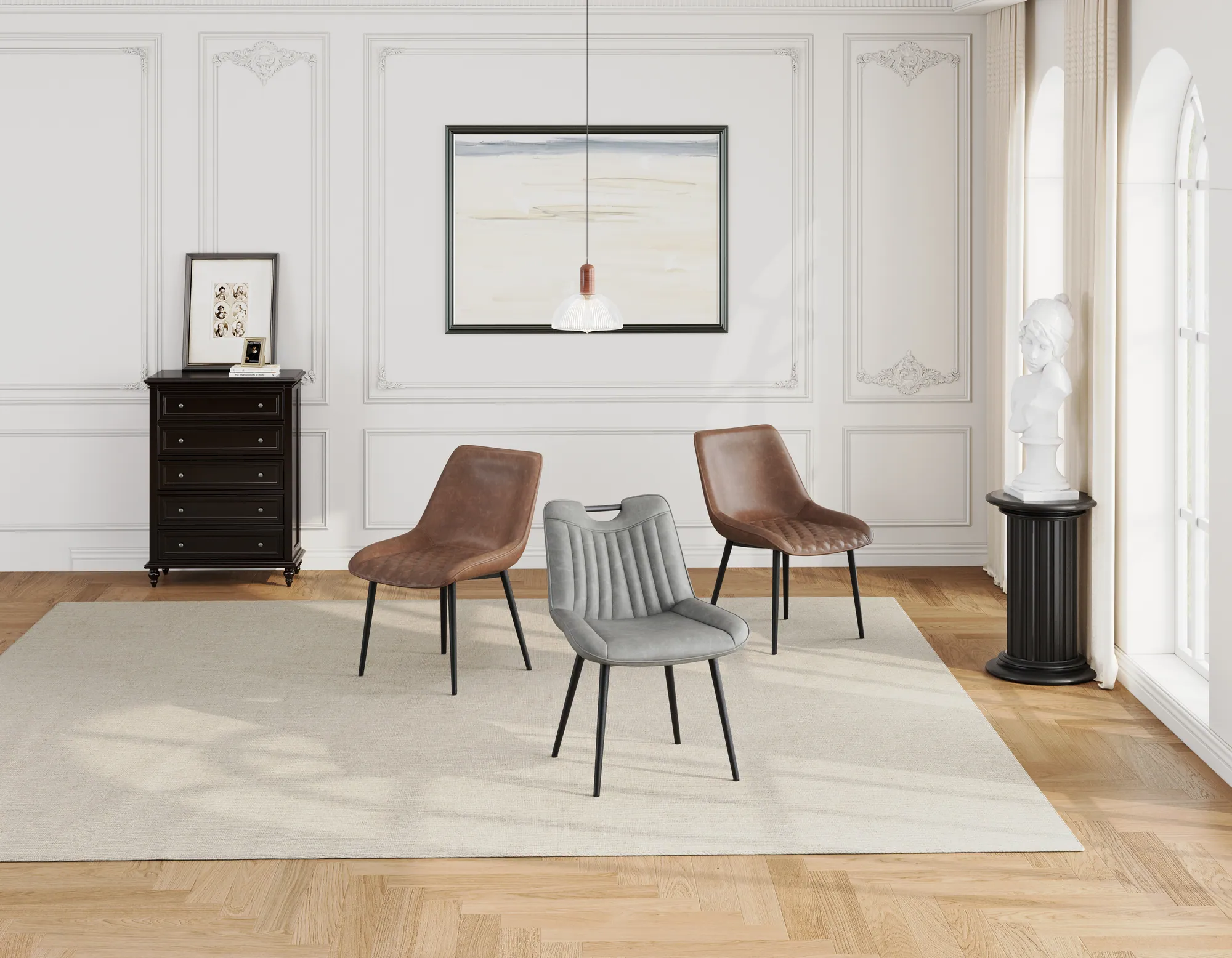
The people
The person who draws a bed frame assembles the first sample, we sit on every fabric before we approve it, and we design outdoor pieces for wind first.
We draw the headboard first, then the room around it. We sit on every fabric sample before it earns a place, because velvet and boucle behave differently under a hand and under a lamp.
The person who draws a bed also assembles the first one, testing the platform fit and how it meets the wall. For outdoor pieces, we think about wind before we think about photographs.
We draw a headboard and then we build the first one. The same person does both. We sit on it, lean back, read under the light. A fabric that photographs well can feel cheap when you rest your arm on it, so we test it that way. No one signs off on a sample they haven't lived with for a few days.
The people who answer letters from customers are the same ones who draw the headboards and assemble the first samples. They know how velvet catches the light and how a platform bed sits against a wall. They can tell you honestly if a piece will fit your room or your life, but they cannot take your order or payment. That part goes through our retail partner.
On film
We're known for tall headboards that anchor a room. This film shows one in velvet, no box spring needed.
Quality
We update our prices just before they go live, so what you see is as current as we can make it.
Every piece earns its page only after we record width, height, and depth: 321 of 326 pieces carry those three numbers. We measure headboard height on 75 frames, from 49.2″ to 65″, so you can judge ceiling clearance. We state load capacity only on beds we have tested ourselves (96 carry a figure) and we never call a frame “no box spring” unless the slats are spaced and supported to carry a mattress alone (144 frames). If a piece claims easy or no-tool assembly, we put it together more than once before we write that (151).
For a slatted platform, we load it to the weight we publish and leave it a while, then check for sag or noise. A headboard joint gets braced at the top while someone leans into it from bed height, if it creaks or shifts, we rework the bracket. We sit on upholstered samples before we approve a fabric, because velvet, linen, and boucle each soften under use in their own way.
We don’t know how a tall headboard will look against your wall color or whether the 65″‑inch wingback will skim a sloped ceiling. We publish a load figure only on the pieces that pass our test, not on the whole range. “Easy assembly” means no special tools, but a king frame always wants a second pair of hands, and we tell you that plainly.
Certification
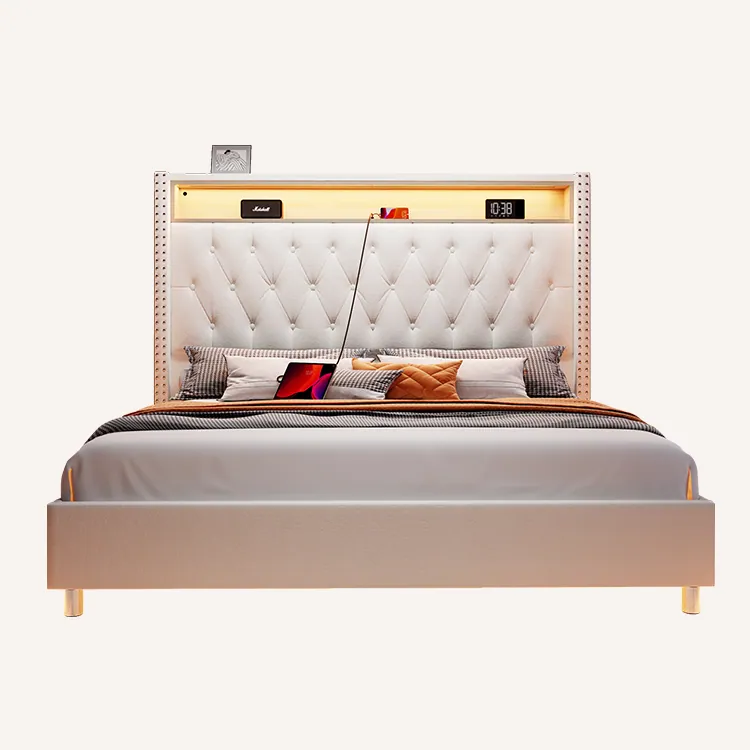
NSF shows on 2 of our stainless steel pieces, mostly prep tables and drawer cabinets, because an outdoor kitchen still answers to food safety.
We do not print a badge or a seal unless we can back it with something checkable. On a pair of stainless steel prep tables, you will see the NSF mark right on the piece, because it belongs there. For everything else, we will not invent a certification we cannot show you. Upholstered furniture sold in the United States must meet a federal smolder standard. We quote the rule beside this text and let the label on each piece say what that piece meets, rather than turning it into a logo of our own.
What we can do is publish the numbers. We list headboard heights, widths, depths and load figures where we have them. 321 of 326 pieces in the range carry full measurements, and 96 publish a load figure. When a number is missing, we say so plainly. You will see a fabric named on 55 velvet frames, 19 linen frames and 3 boucle frames, among others, because we think the hand of a fabric matters and you ought to know what you are getting.
A badge does not make a bed frame sturdy, and a certificate printed on a box does not tell you whether a gazebo will hold up to the wind where you live. We put our effort into the things you can verify yourself, right now, on the page.
Items manufactured, imported, or reupholstered on or after June 25, 2021, must comply with the test method specified in California Standard Technical Bulletin (TB) 117-2013.
U.S. Consumer Product Safety Commission, Upholstered Furniture Business Guidance. Read 23 August 2026. Source
TB 117-2013 has four test methods for cover fabric, resilient filling material, barrier material, and decking material.
U.S. Consumer Product Safety Commission, Upholstered Furniture Business Guidance. Read 23 August 2026. Source
To determine if they pass their respective test, each component is evaluated against three performance criteria for char length, smoldering, and transition to open flaming.
U.S. Consumer Product Safety Commission, Upholstered Furniture Business Guidance. Read 23 August 2026. Source
Outdoor
6 of the 81 pieces in this part of the range.

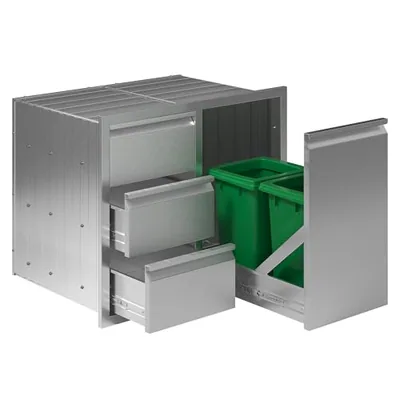
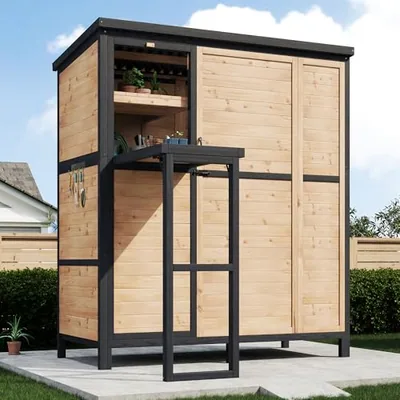
Added value: footprint planner
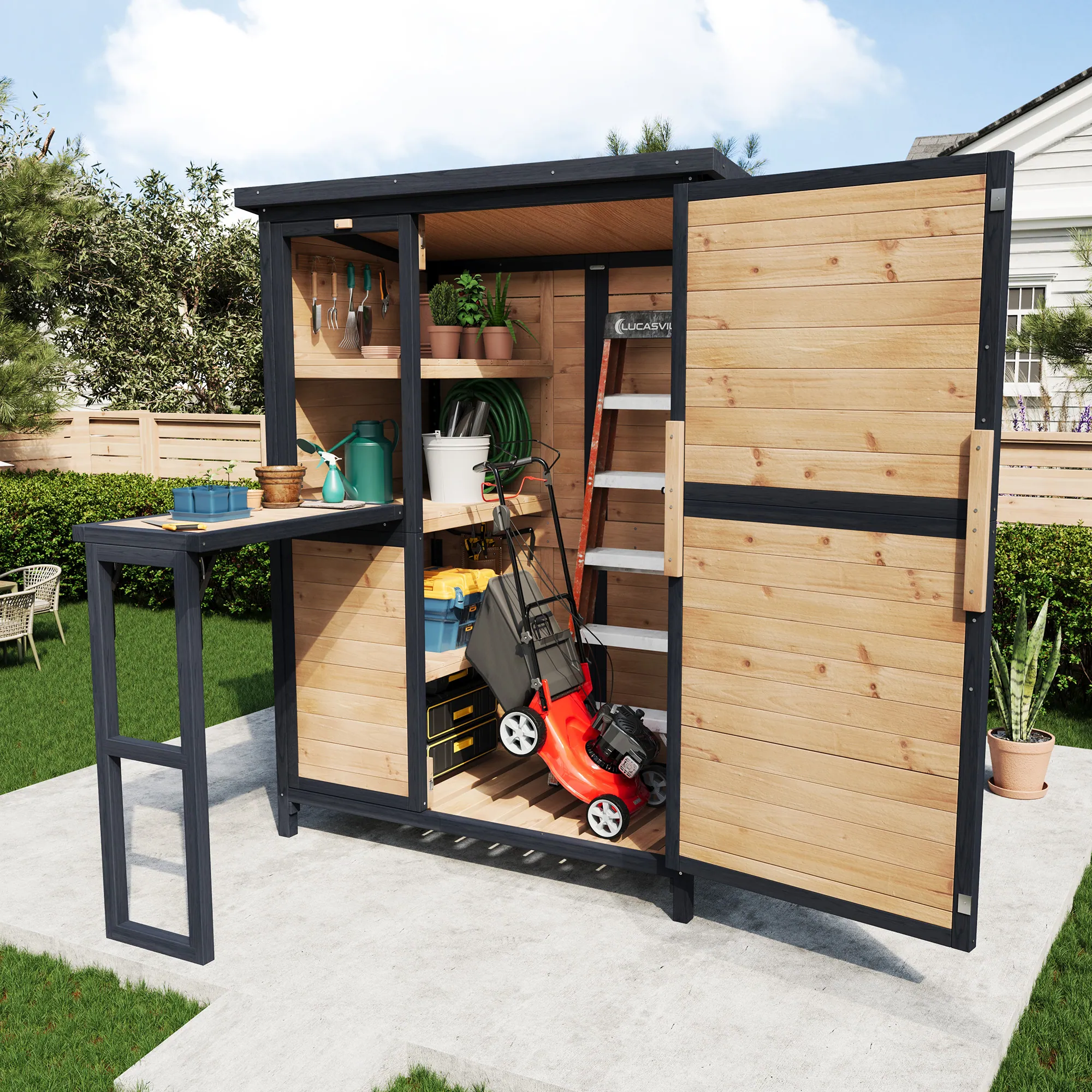
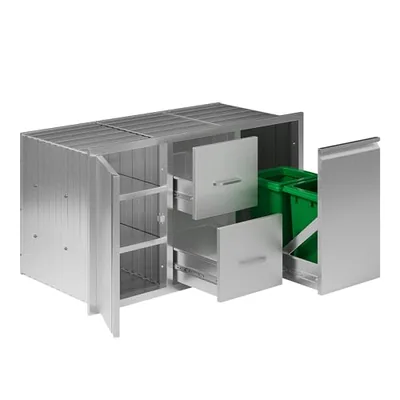
Every one of our cedar gazebos, pergolas, carports and sheds needs a level base you prepare first, and we supply the structure and the fasteners, not the foundation.
Before you unpack a single beam, measure the ground. A level base is not a luxury. It keeps doors from binding and walls from twisting. Add the roof overhang to the footprint when you stake out the site. Walk the door swing. If the door swings out, you need that clear arc. If it swings in, you give up floor space. We mark all of this on the plan, but you want to see it on the grass before the first bolt goes in.
We design every outdoor structure for the wind first. A pergola that catches a crosswind like a box kite is not something we will put our name on. The roof profile, the post spacing, the hardware that ties beam to column all start from the wind load the piece will carry, not from how it will photograph. That means a heavy cedar frame in a windy spot needs a heavier anchor than a low greenhouse tucked against a fence.
We can’t guess your wind, so we build to a standard that holds in most places. We publish the load figure for every structure that carries one. On a gazebo, that number tells you what the roof can take in wind and snow. If you live where the wind howls, talk to a local builder about your footings. The frame is designed to hold. The ground it sits on is yours to get right.
| Structure | Pieces | Smallest footprint | Largest footprint | Materials | From |
|---|---|---|---|---|---|
| Gazebo | 4 | 10′ × 12′ | 20′ × 20′ | Cedar | $997.47 |
| Pergola | 5 | 10′ × 12′ | 12′ × 24′ | Cedar | $599.99 |
| Carport | 10 | 10′ × 12′ | 20′ × 40′ | Solid wood, Steel, Cedar | $649.99 |
| Greenhouse | 16 | 6′ × 8′ | 16′ × 12′ | Steel, Polycarbonate, Cedar | $359.99 |
| Shed | 8 | 8′ × 6′ | 10′ × 13.5′ | Solid wood, Steel | $329.99 |
| Dog kennel | 2 | 10′ × 13′ | 10′ × 20′ | not stated | $599.99 |
About Jocisland
We build furniture for rooms where one piece has to do the work. We make 326 pieces across 12 departments, and 185 of them are bed frames. In a bedroom where the bed is the only big thing, the headboard carries the room. We draw it first and the room second, and we keep its height tied to the wall, not to the frame. The result is a bed that stands up straight, and 144 of our frames say a box spring is not needed.
A living room often has to do three jobs at once. It is a place to sit, a place to sleep, and a place to keep the remotes and tablets. Our sectionals, sleeper sofas, and recliners are built around that. Some have a charging station or USB. Some fold out for guests. None of them are meant to hide in a corner.
A yard wants a roof. We make cedar gazebos, pergolas, and carports that give you that roof, along with greenhouses and sheds that work in wind and rain. If you want furniture that fades away, this range is not for you. Our pieces need a little room to stand in, and they are for people who want the bed, the sofa, or the gazebo to be the main thing in the room.
We start with the headboard. A tall wingback in boucle or a low linen panel sets the proportion for the wall. From there we draw the frame, then the nightstand, then the dresser. The room grows around that first vertical line. We sit on every sample before we approve a fabric, because velvet catches light differently than corduroy and faux fur reads warmer under a lamp.
We build platform beds that take a mattress without a box spring, and we say so where it is true. For storage beds, we hide drawers and lift-up platforms so the clean silhouette stays intact. LED strips and charging ports get tucked into the headboard where they do not shout.
After the bedroom we moved to the living room, starting again from the seat. Cloud sectionals and power recliners had to hold a sprawl without looking heavy. Then we stepped outside, designing for wind first and photograph second. Cedar gazebos, polycarbonate greenhouses, stainless outdoor kitchen tables. The range grew to 326 pieces across 12 departments, but the rule stays the same: draw the focal point first, then the room around it. If a piece does not earn its footprint, we do not make it.
| Department | Pieces | From | What it is for |
|---|---|---|---|
| Outdoor Structures | 50 | $199.99 | Gazebos, pergolas, carports, greenhouses and sheds: cedar and steel for the yard. |
| Hot Tubs & Home Extras | 9 | $174.99 | Hot tubs, a drawer fridge, a ceiling fan and the shower kit: the pieces that finish a house. |
| Outdoor Kitchen & Stainless | 31 | $79.99 | Stainless steel sinks, prep tables, drawer cabinets and the grill between them. |
| Display & Storage Cabinets | 11 | $129.99 | RGB-lit glass display cabinets and modular storage units that stack the way you need. |
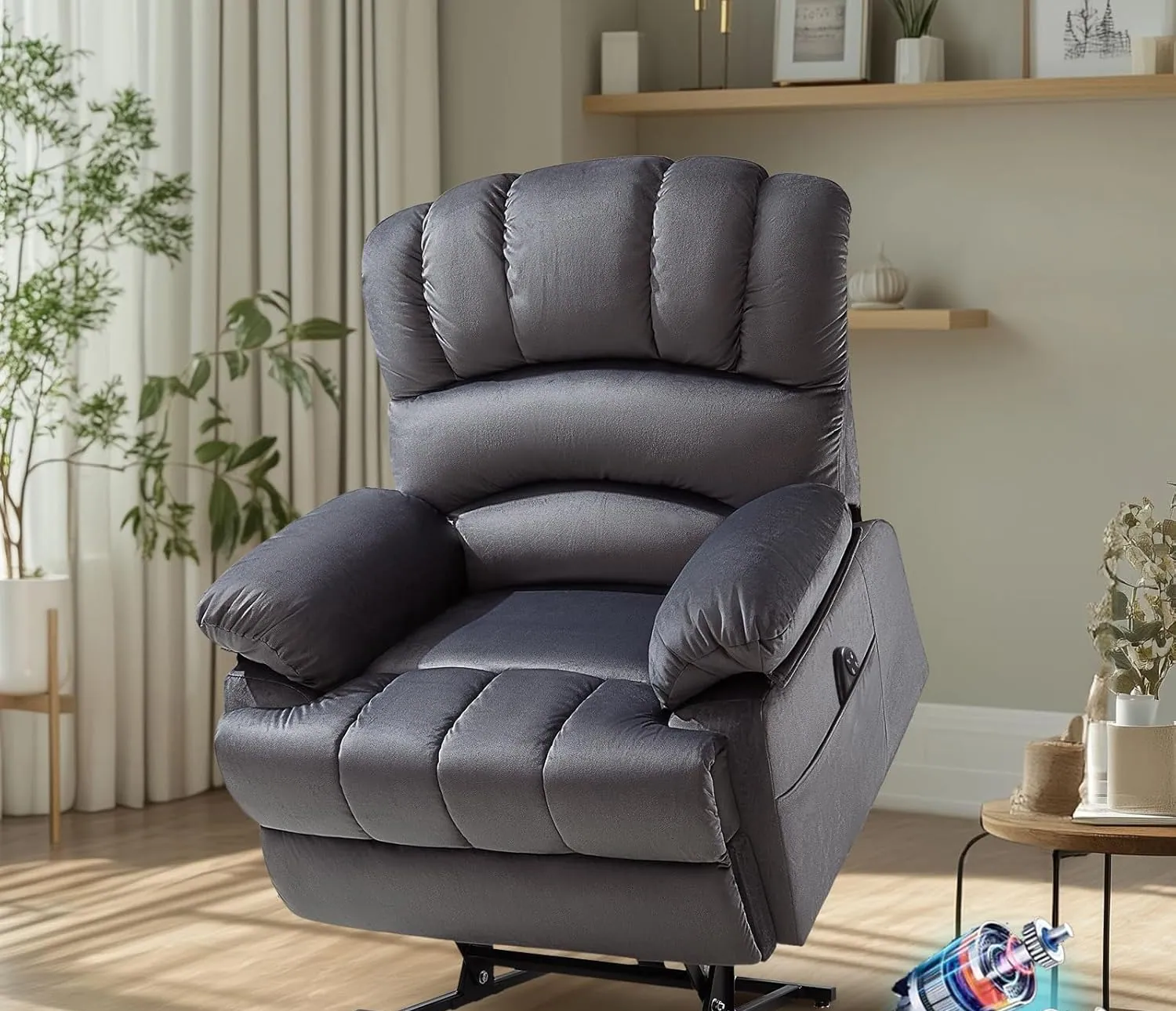
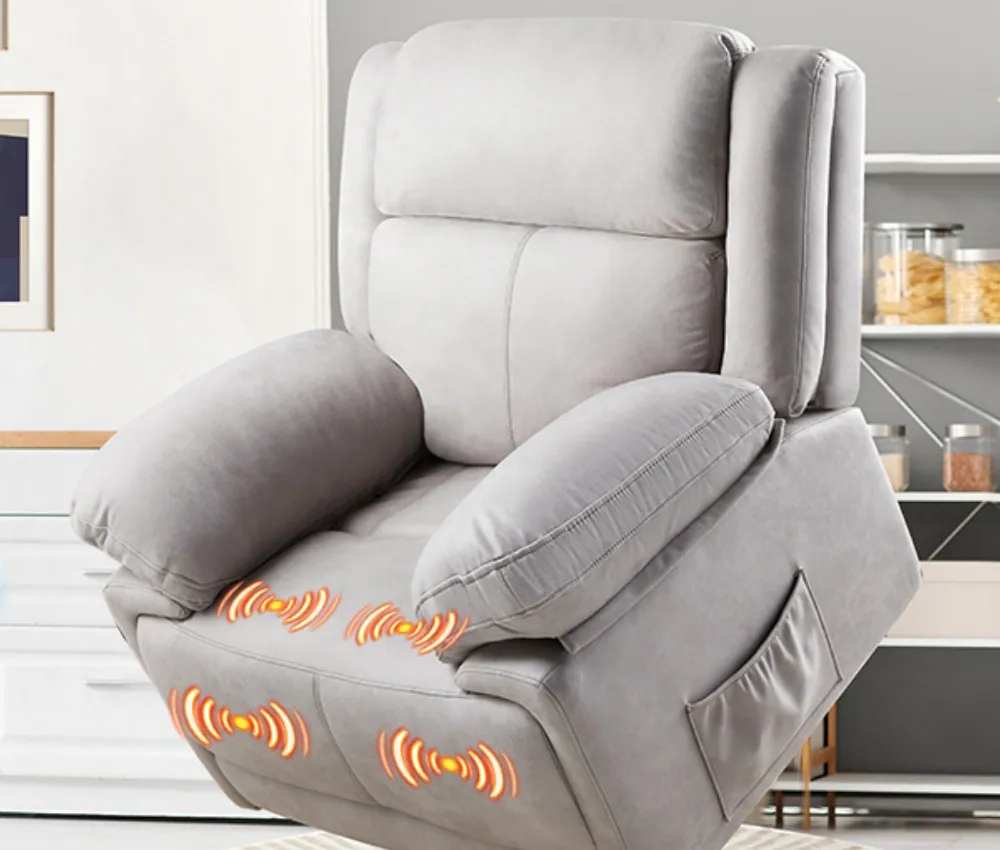
| Recliners & Chairs | 8 | $139.99 | Power recliners, nursery rockers, accent chairs and home theater seating. |
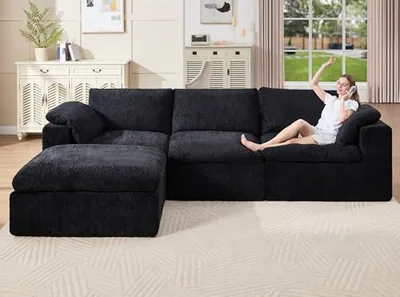
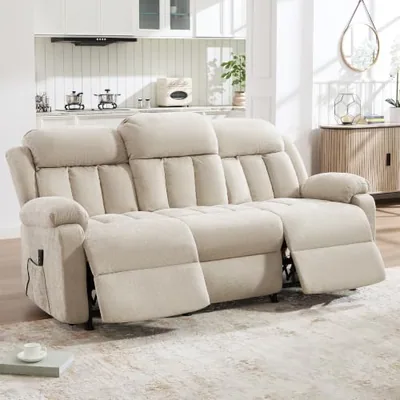
| Sofas & Sectionals | 29 | $206.99 | Cloud sectionals, sleeper sofas, chaise lounges and power reclining sofas. |
| Bedroom Sets & Nightstands | 6 | $149.99 | Three-piece bedroom sets and nightstand pairs that match the bed. |
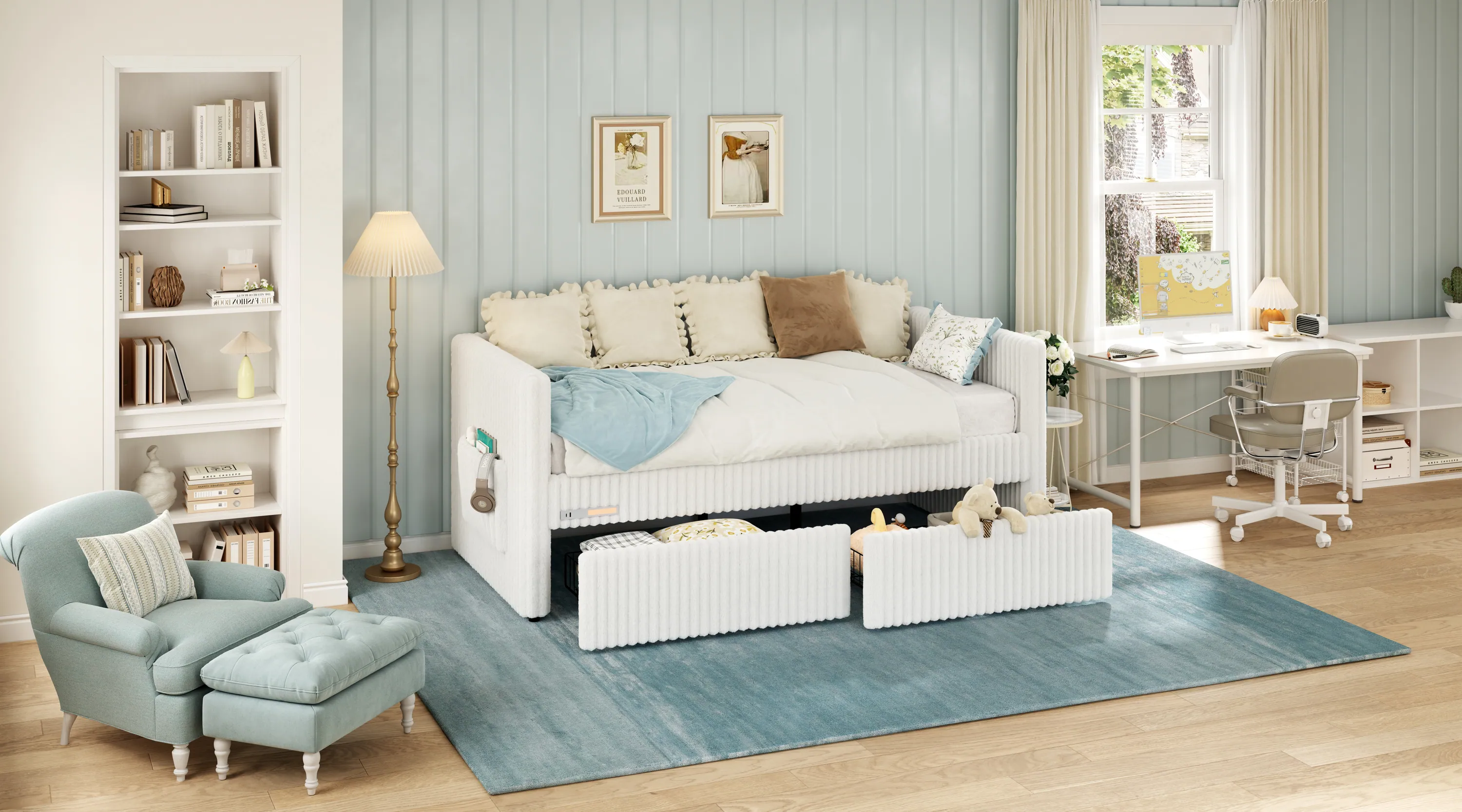
| Kids & Teen Beds | 27 | $149.99 | Cloud headboards, house beds, bunk beds with slides, daybeds and corner beds with bookcases. |
| Storage Beds | 22 | $179.99 | Lift-up platforms, drawer bases and storage headboards that turn a bed into a closet. |
| LED & Charging Beds | 19 | $189.99 | Headboards with LED strips, reading lights and charging stations built in. |
| Solid Wood Beds | 21 | $179.99 | Walnut, ash and oak platform beds with solid wood rails and upholstered headboards. |
| Upholstered Beds | 93 | $179.98 | Velvet, linen, faux fur and boucle bed frames with tall wingback, tufted and sleigh headboards. |
We list height, width and depth on 321 of our 326 pieces. We do it because a bed that fits the wall but not the baseboard is a return waiting to happen. A greenhouse that catches the fence by three inches is a Saturday you will not get back. We publish the dimensions we would want before we clear a room.
When a fabric matters we name it. Velvet reads different from linen under a reading lamp, and boucle holds a shadow in a way corduroy does not. We sit on every sample before we approve a fabric, and we write the name on the piece so you can match it to a swatch you already have. If a frame does not list a fabric it is because the material is printed or painted, not woven, and we think calling it something it is not helps no one.
96 pieces carry a load figure. We test the platform, the slats, the joints, and we publish the number. A frame that holds 3080 does not hold 3080 plus the dog, and we would rather you know that before you invite the dog up.
We also say what a piece does not have. A bed without storage says so, because a person shopping for a lift-up platform should not waste a click on a frame that hides nothing. A sofa without a sleeper says so. A pergola that ships without a canopy says so. We cannot list every absence, but we list the ones that change how a room works.
Every number and every name sits beside a photograph. The photograph shows the color under daylight bulbs and the proportions against a wall. The text tells you what the photograph cannot: how much it weighs, whether it needs a box spring, whether the drawers open left or right. We think the two belong together, and we keep them on the same page.
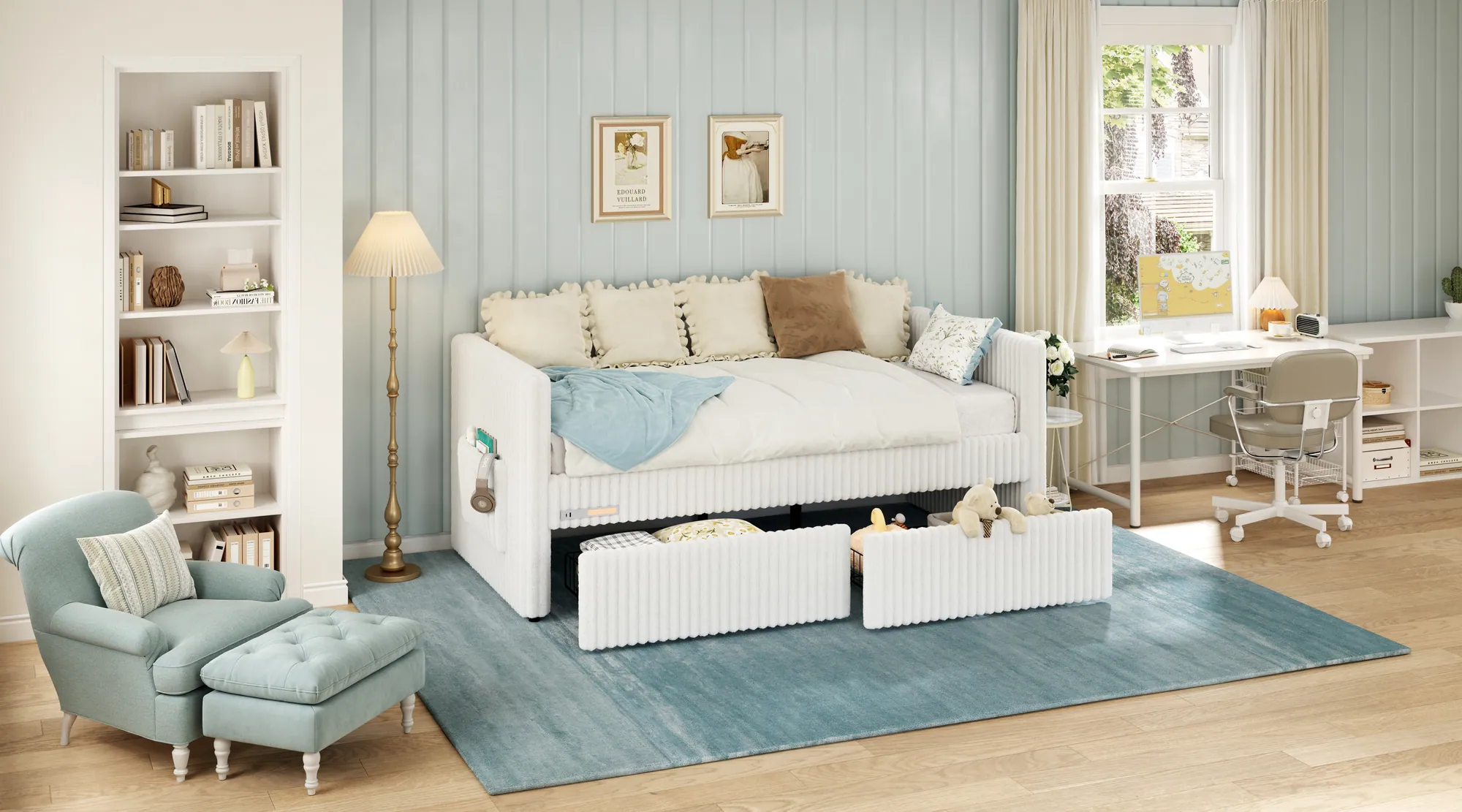
A headboard should meet the wall, not the pillow.
We are not a custom joinery. None of our pieces are measured to one wall or cut to order. If you want a bed built into an alcove or a sofa that follows a bay window, our range will not give you that. What we make is furniture that arrives flat in boxes and asks for an evening of assembly.
151 of our pieces carry a note that assembly is straightforward, and some go together without tools. But all of them need time. Expect to unpack, sort hardware, and turn a hex key for a couple of hours. We think that is a fair trade for a piece you can carry through a doorway and build where it stands.
This furniture is not for someone who wants neither. If the thought of a flat box and an evening with an Allen key makes you tired, we are probably not your maker. That is fine. We would rather you know before you open the box.
We keep a range of 326 pieces across 12 departments, and we don't add something just to fill a gap. Right now we're working on a headboard profile that sits closer to the wall, because we heard from people who need every inch of floor space. We're testing a new linen that looks better after the first wash, not worse. And we're still sitting on samples until we know how a fabric holds up under a reading lamp and a cat.
The way we decide hasn't changed. You draw it, you build the first one yourself, and you live with it for a while. Most ideas don't make it past that week. The ones that do feel right the second you walk into the room, not just in the photograph. We design for the wall a piece will lean against and the wind it will stand in. If it looks good in a studio and buckles in the backyard, it was never ours.
In the yard, we're trying a new gazebo shape that sheds wind without rattling, because the first thing you hear out there shouldn't be your own structure. And the same person who drew that gazebo will assemble the first sample, so they'll hear every rattle before you do.
Journal
We walk you through choosing a bed frame, building a backyard, and a living room that changes shape with you.
Questions
Most of our platform beds are designed to hold a mattress directly, with no box spring required. We state it on the frame page when that is true. If the page does not say it, plan for one.
We measure from the floor to the top of the headboard. Our published heights run from 49.2″ to 65″. We cannot trim a headboard to fit under a window, so check the space before you order.
They do not. Most ship in a few boxes with the hardware included, and 151 of our frames are marked for easy or no-tool assembly. We don't offer an assembly service through the site.
Velvet and boucle hide claw marks better than linen does, but no fabric we use is scratch-proof. For a room with strong light, we would lean toward linen. Faux fur and corduroy can show wear faster in those spots.
It depends on the lift-up platform or drawer height. You can fit folded bedding, off-season clothes, or shoes. We do not recommend storing heavy tools or anything you need to reach daily, because the lift is not meant for constant opening.
Level it first. Our cedar structures need a flat, well-drained base, and we do not supply a foundation or concrete pad. We cannot advise on local permits or wind ratings, so check your area's rules before you buy.
It comes off the site until it is buyable again. We update our figures on a schedule, and a piece without a current price is not something we want you measuring a room for. When it returns, it returns with its measurements and its price.
Ordering and payment happen at checkout with our retail partner. We don't take payment on this site, and we can't look up an order or tell you when it will arrive.